114 BC
The Targaryen Flight
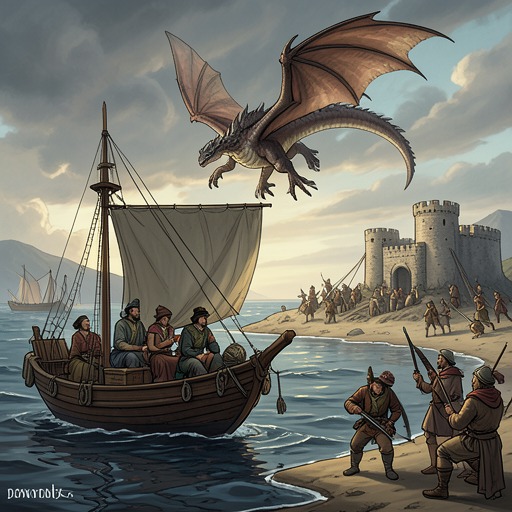
Twelve years before the Doom of [Valyria](entity:location-recall-location-valyria-25f6cc64087a), [Aenar Targaryen](entity:character-recall-character-aenar-targaryen-7826471bd242) sold his holdings in the Freehold and moved his family, wealth, and dragons to [Dragonstone](entity:location-recall-location-dragonstone-17d3e2de9fa1). His daughter [Daenys Targaryen](entity:character-recall-character-daenys-targaryen-147e85103763) had foreseen Valyria’s destruction by fire.
When the Doom came, the Targaryens alone among the dragonlords survived. For generations they looked east rather than seeking dominion over [Westeros](entity:location-recall-location-fdb143024a25).
Before 2 BC
Aegon Turns West
[Aegon Targaryen](entity:character-recall-character-aegon-targaryen-5c896a72000a)’s interest in [Westeros](entity:location-recall-location-fdb143024a25) predated his invasion: he had the [Painted Table](entity:object-recall-object-painted-table-ceccd570cc11) made and had visited Oldtown and the Arbor. The [Seven Kingdoms](entity:location-recall-location-6d0b82bc7034) remained divided among rival rulers, with [Harren Hoare](entity:character-recall-character-harren-hoare-40009f940816) and [Argilac Durrandon](entity:character-recall-character-argilac-durrandon-373941183fa8) especially close to [Dragonstone](entity:location-recall-location-dragonstone-17d3e2de9fa1).
Argilac proposed marriage and offered lands as a buffer against Harren. Aegon refused, countered with broader territorial demands, and turned to war after Argilac mutilated his envoy.
2 BC
Aegon’s Landing
Aegon, his sisters, and a modest force landed at the mouth of the Blackwater Rush and built a rough fort on the highest hill. Their dragons helped secure nearby castles, while [Orys Baratheon](entity:character-recall-character-orys-baratheon-283702ec090b) led the defeat of the combined forces of Duskendale and Maidenpool.
Aegon confirmed defeated lords in their lands and titles, appointed Orys his Hand, and was crowned at the new [Aegonfort](entity:location-recall-location-96a4452be934). His claim to rule all [Westeros](entity:location-recall-location-fdb143024a25) was now public, though the other kings had yet to submit.
2–1 BC
The Fall of Harren Hoare
[Riverlords](entity:organization-recall-organization-b4f9476db325) rebelled against [Harren Hoare](entity:character-recall-character-harren-hoare-40009f940816), whose building of Harrenhal had impoverished the region. [Edmyn Tully](entity:character-recall-character-edmyn-tully-ceff7aed322f) declared for Aegon and drew the other lords of the Trident into the rising.
Harren rejected Aegon’s offer to yield and trusted the castle’s stone walls to protect him from dragons. Balerion’s fire melted Harrenhal’s towers and killed Harren and his sons; Aegon then named Edmyn Tully Lord Paramount of the Trident.
2–1 BC
The Last Storm
[Argilac Durrandon](entity:character-recall-character-argilac-durrandon-373941183fa8) chose to meet [Orys Baratheon](entity:character-recall-character-orys-baratheon-283702ec090b)’s force in the open rather than perish inside Storm’s End. Rain and mud disrupted the stormlanders’ cavalry, while Rhaenys and Meraxes broke their final charge with dragonfire.
Argilac fought on foot until Orys killed him. His daughter Argella was delivered to the victors, but Orys treated her gently, took the Durrandon arms and words, and made her his wife.
1 BC
The Field of Fire
[Mern IX Gardener](entity:character-recall-character-mern-ix-gardener-c19f23c0c994) and [Loren I Lannister](entity:character-recall-character-loren-i-lannister-f9260a4bb5aa) united the largest host [Westeros](entity:location-recall-location-fdb143024a25) had seen to oppose Aegon. Though Aegon’s army was badly outnumbered, the dry grass and wind gave his queens’ dragons a weapon beyond their own flames.
The fires destroyed the Gardener host and killed Mern and his heirs. Loren escaped, surrendered, and was confirmed as Lord of Casterly Rock; Aegon then granted [Highgarden](entity:location-recall-location-1568b46b0f24) to its steward, [Harlan Tyrell](entity:character-recall-character-harlan-tyrell-9b54a7532837).
1 BC
The King Who Knelt
[Torrhen Stark](entity:character-recall-character-torrhen-stark-9b35822d97bf) crossed [the Neck](entity:location-recall-location-140e05514511) with a northern army and found Aegon’s forces, joined by the newly submitted kingdoms, waiting across the Trident. His bannermen debated whether to fight, retreat, or attempt to kill the dragons.
Torrhen instead sent his bastard brother [Brandon Snow](entity:character-recall-character-brandon-snow-5cd60ef3cb2a) to negotiate. The next morning he crossed the river, knelt, and surrendered his crown, becoming Lord of [Winterfell](entity:location-recall-location-winterfell-9f1a85c6a744) and Warden of the North without a battle.
1 BC
Dorne Refuses Submission
Rhaenys flew to Sunspear expecting [Dorne](entity:location-recall-location-dorne-3b9fd410de60) to yield, but Princess [Meria Martell](entity:character-recall-character-meria-martell-12468adbfa82) refused both battle and submission. She warned that Dorne would remain unbowed and that the invaders were not wanted.
Aegon later entered Oldtown without resistance after the High Septon’s vision persuaded Lord Hightower to open the gates. The High Septon anointed Aegon there, and that coronation became the accepted start of his reign.
2–13 AC
The Dragon’s First Wars
After Aegon’s coronation, rebellion and rival claimants troubled the Three Sisters and the Iron Islands. Aegon subdued the ironborn, allowed them to choose [Vickon Greyjoy](entity:character-recall-character-vickon-greyjoy-82dbc38e03d2) as their lord, and granted Harrenhal to Quenton Qoherys under [Edmyn Tully](entity:character-recall-character-edmyn-tully-ceff7aed322f)’s authority.
In 4 AC, the [First Dornish War](entity:event-recall-event-first-dornish-war-2dab945d5b20) began. The Dornish avoided pitched battles, destroyed supplies, and turned the invasion’s own scale against it; despite repeated dragon attacks, [Dorne](entity:location-recall-location-dorne-3b9fd410de60) remained independent after years of brutal raids and reprisals.
10 AC
Meraxes Falls
During the Dornish war, a scorpion bolt struck Meraxes in the eye at the [Hellholt](entity:location-recall-location-2c98fe668135). The dragon crashed into the castle, and Rhaenys died with her; accounts disagree about the precise manner of her death.
Aegon and Visenya answered with the Dragon’s Wroth, burning Dornish castles and pursuing their lords. The devastation could not force submission, and the war ended only after Prince Nymor sent Rhaenys’s skull and peace terms to [King’s Landing](entity:location-recall-location-king-s-landing-683397e5db0f).
1–37 AC
Aegon’s Rule
Aegon worked to bind the conquered kingdoms without erasing their laws. He maintained royal progresses, settled disputes through the Crown, regularized customs and taxes, and encouraged marriages and fosterings between regions.
[King’s Landing](entity:location-recall-location-king-s-landing-683397e5db0f) grew from a village into a major city, and Aegon ordered walls for its protection. He also established the office of Grand Maester and created the [Kingsguard](entity:organization-recall-organization-823356923a2f), while relying heavily on Visenya, Rhaenys, and his Hand.
7–37 AC
The Sons of the Dragon
Aenys, Rhaenys’s son, survived a sickly infancy and became the heir; Visenya later gave birth to Maegor. Aenys married [Alyssa Velaryon](entity:character-recall-character-alyssa-velaryon-116122aa31f9) and had several children, while Maegor married [Ceryse Hightower](entity:character-recall-character-ceryse-hightower-cc76d1c51d44) but remained without an heir.
The [Faith](entity:organization-recall-organization-af54e359af3e) accepted the Conqueror’s marriages without declaring them lawful. When Aenys proposed marrying his children Rhaena and Aegon, the High Septon denounced the match, setting the stage for a wider conflict between the Crown and the Faith.
37 AC
Aegon’s Death
Aegon died of a stroke on [Dragonstone](entity:location-recall-location-dragonstone-17d3e2de9fa1) while showing his grandsons the [Painted Table](entity:object-recall-object-painted-table-ceccd570cc11). His son Aenys returned for the funeral and was crowned, then gave his brother Maegor the sword [Blackfyre](entity:object-recall-object-blackfyre-369187c5f8c5) and promised that they would rule together.
The gesture did not prevent disputes over succession or the [Faith](entity:organization-recall-organization-af54e359af3e). Rebellions soon broke out across the realm, exposing the weakness of Aenys’s government and giving Maegor an opportunity to claim power.
39–41 AC
Aenys Faces Rebellion
Revolts spread in the riverlands, Vale, Iron Islands, and Dornish Marches. Aenys hesitated while his lords and Maegor acted against the rebels; Maegor claimed Balerion and became the most effective royal commander.
When Maegor took a second wife, [Alys Harroway](entity:character-recall-character-alys-harroway-d6b8a544d7a1), without the king’s permission, the [Faith](entity:organization-recall-organization-af54e359af3e) condemned him. Aenys exiled him, but the conflict widened when the king arranged the marriage of Rhaena and Aegon, provoking the [Faith Militant](entity:organization-recall-organization-bf92b9859131) to rise against the Crown.
42 AC
Maegor Takes the Throne
Aenys fled the growing [Faith Militant](entity:organization-recall-organization-bf92b9859131) crisis to [Dragonstone](entity:location-recall-location-dragonstone-17d3e2de9fa1) and died there. Visenya returned with Maegor, who claimed the [Iron Throne](entity:object-recall-object-iron-throne-c21070c36c7f) despite Aenys’s surviving son and heir, [Aegon the Uncrowned](entity:character-recall-character-aegon-the-uncrowned-5b99c655161c).
Maegor executed Grand Maester [Gawen](entity:character-recall-character-gawen-2f2672fec71a) and defeated the [Warrior’s Sons](entity:organization-recall-organization-2a6fa29f0dbc) in a [Trial of Seven](entity:event-recall-event-trial-of-seven-a8d3b29283a1). After recovering from his wounds, he burned their fortified sept and began a war against the [Faith](entity:organization-recall-organization-af54e359af3e) that would define his reign.
43 AC
Aegon the Uncrowned Falls
[Aegon the Uncrowned](entity:character-recall-character-aegon-the-uncrowned-5b99c655161c) and Rhaena escaped [King’s Landing](entity:location-recall-location-king-s-landing-683397e5db0f) with their dragons and raised a rebellion. Maegor’s forces met them near the Gods Eye, where Balerion fought Quicksilver in the first dragon battle in living memory.
Quicksilver fell, and Aegon died with her. Rhaena escaped with their daughters, while Maegor returned to the capital and continued his bloody rule without an heir of his own.
44–48 AC
The End of Maegor
Maegor’s cruelty intensified as his queens failed to bear him a living heir. He tortured and killed [Alys Harroway](entity:character-recall-character-alys-harroway-d6b8a544d7a1), destroyed her family, and executed his nephew Viserys after Alyssa escaped [Dragonstone](entity:location-recall-location-dragonstone-17d3e2de9fa1) with her younger children.
As opposition gathered, Jaehaerys was proclaimed king at Storm’s End. Maegor was found dead on the [Iron Throne](entity:object-recall-object-iron-throne-c21070c36c7f), his death unexplained. Jaehaerys chose clemency for most of Maegor’s supporters, asking them to submit rather than begin his reign with mass executions.
48 AC
The Faith Is Reconciled
Jaehaerys traveled to Oldtown for his coronation and offered the outlawed Poor Fellows clemency if they joined the Night’s Watch. He also offered [Joffrey Doggett](entity:character-recall-character-joffrey-doggett-bd3fd8a6b857), leader of the surviving [Warrior’s Sons](entity:organization-recall-organization-2a6fa29f0dbc), a place in the [Kingsguard](entity:organization-recall-organization-823356923a2f), while refusing to restore the military orders.
The king’s policies helped reconcile the [Faith](entity:organization-recall-organization-af54e359af3e) and the [Iron Throne](entity:object-recall-object-iron-throne-c21070c36c7f). The suspected exchange of the twins Aerea and Rhaella also altered the identity of the heir apparent, though no one openly challenged the deception.
49–50 AC
Three Brides and a Secret Marriage
Rhaena secretly married [Androw Farman](entity:character-recall-character-androw-farman-792a570c22f4), while Queen Regent Alyssa married her Hand, [Rogar Baratheon](entity:character-recall-character-rogar-baratheon-e5e9260bf93a). Their choices left resentments within the royal family and raised fears about who would control the young king.
Jaehaerys and Alysanne secretly married on [Dragonstone](entity:location-recall-location-dragonstone-17d3e2de9fa1) against the regents’ plans. Rogar wanted the union undone, but Jaehaerys refused to be separated from his sister and eventually reconciled with his former Hand, pardoning him on the condition that he honor Alyssa and support the royal marriage.
50–52 AC
Jaehaerys Takes Power
When Jaehaerys came of age, he returned to [King’s Landing](entity:location-recall-location-king-s-landing-683397e5db0f), reformed the council, dismissed unpopular officials, and summoned [Rogar Baratheon](entity:character-recall-character-rogar-baratheon-e5e9260bf93a) to account for his attempts to control the succession. The king pardoned him but insisted that he remain loyal to the queen and the Crown.
Jaehaerys publicly married Alysanne and defended the union through the [Doctrine of Exceptionalism](entity:rule-recall-rule-doctrine-of-exceptionali-8d3e072c248c). The [Seven Speakers](entity:organization-recall-organization-afa52568a421) carried the argument across the realm, and the expected religious uprising did not occur.
51 AC
Rhaena Claims Dragonstone
Rhaena asked Jaehaerys for [Dragonstone](entity:location-recall-location-dragonstone-17d3e2de9fa1) as her own seat, arguing that she needed a home beyond the reach of other lords. He granted it as a royal gift, not an independent sovereignty, and restored her daughter Aerea to her.
Aerea remained unhappy on Dragonstone, feeling removed from the life she had known at court. Her mother’s renewed authority over her did not ease their strained relationship.
54 AC
The Year of the Stranger
[Elissa Farman](entity:character-recall-character-elissa-farman-cabf9edd39c9) stole three dragon eggs from [Dragonstone](entity:location-recall-location-dragonstone-17d3e2de9fa1) and escaped across the sea, hoping to finance a voyage west. Before the court could recover them, a mysterious disease killed several women in Rhaena’s household.
The deaths proved to be poisonings by [Androw Farman](entity:character-recall-character-androw-farman-792a570c22f4), whose resentment had grown into murder. Rhaena ordered him captured, but he leapt from a tower and died; his victims’ deaths and the loss of Aerea later made the year infamous as the [Year of the Stranger](entity:event-recall-event-year-of-the-stranger-0a01b4fc7a64).
54–56 AC
Aerea Returns from Valyria
Aerea fled [Dragonstone](entity:location-recall-location-dragonstone-17d3e2de9fa1) on Balerion and disappeared for more than a year. When the dragon returned, the princess was gravely ill and died soon after; [Septon Barth](entity:character-recall-character-septon-barth-3acad36d2042)’s secret account described creatures moving inside her body and emerging as she died.
Barth concluded that Balerion had taken her to [Valyria](entity:location-recall-location-valyria-25f6cc64087a), where the dragon himself had been wounded. Jaehaerys forbade travel to the [Smoking Sea](entity:location-recall-location-10168221b057) and ordered the dragons guarded, founding the [Dragonkeepers](entity:organization-recall-organization-66d96368b6a2).
56–59 AC
The Voyage of the Sun Chaser
[Elissa Farman](entity:character-recall-character-elissa-farman-cabf9edd39c9), sailing as Alys Westhill, left Oldtown aboard the [Sun Chaser](entity:object-recall-object-fccdfd5c6755) to search for lands beyond the Sunset Sea. [The Hightower](entity:location-recall-location-the-hightower-6b3a2cc36b85) ships accompanying her were battered by storms and eventually reached [Sothoryos](entity:location-recall-location-0f413fbfaa3e); Elissa continued west and vanished.
Ser [Eustace Hightower](entity:character-recall-character-eustace-hightower-f9687c120d3c) returned with tales of strange islands and deadly southern lands. Years later, [Corlys Velaryon](entity:character-recall-character-corlys-velaryon-2700aea80f37) claimed to have seen the weathered Sun Chaser in Asshai, leaving Elissa’s fate uncertain.
59–60 AC
The Winter Fever
[The Shivers](entity:state-recall-state-the-shivers-7ec9e0ee809e) spread through [Westeros](entity:location-recall-location-fdb143024a25) amid a harsh winter, killing lords, smallfolk, and members of the royal court. [King’s Landing](entity:location-recall-location-king-s-landing-683397e5db0f) suffered heavily, and the disease killed [Grand Maester Benifer](entity:character-recall-character-grand-maester-benif-27a8a5cd7c4d) and several councillors.
The death of Princess Daenerys devastated Aegon and Alysanne, exposing the limits of the belief that Targaryen blood protected its bearers from disease. [Rego Draz](entity:character-recall-character-rego-draz-cff38a3232b5) was later killed by a mob that blamed him and his taxes for the city’s suffering.
58 AC
The Lord’s First Night Abolished
During her northern progress, Alysanne heard women describe the violence of the lords’ first-night privilege. She brought their testimony before the king and council, arguing that the practice violated the [King’s Peace](entity:rule-recall-rule-king-s-peace-c12b155fdf45) and marriage vows.
Jaehaerys hesitated because the custom was ancient and defended as a lordly right. With [Septon Barth](entity:character-recall-character-septon-barth-3acad36d2042)’s support, he abolished it, making sexual violation on a wedding night or any other night a crime of rape.
62 AC onward
Jaehaerys Builds Roads
Jaehaerys ordered a network of proper roads to connect [King’s Landing](entity:location-recall-location-king-s-landing-683397e5db0f) with the major regions of the realm. Existing tracks were muddy, dangerous, and often unbridged; travel was slow and exposed to robbery.
The kingsroad became the first major route completed, with other roads following. The project tied the kingdoms together, improved trade, and became one of the most visible legacies of Jaehaerys’s rule.
92–101 AC
The Successor Dispute
After Prince Aemon died on [Tarth](entity:location-recall-location-607fed5628aa), Jaehaerys named Aemon’s younger brother Baelon heir, passing over Aemon’s daughter Rhaenys and her unborn child. Alysanne objected that a woman could rule and left court in protest, beginning the Second Quarrel.
Baelon’s later death reopened the question. Jaehaerys summoned a Great Council at Harrenhal, where the lords chose Viserys over [Laenor Velaryon](entity:character-recall-character-laenor-velaryon-de206cb89e8c) by a lopsided margin, establishing a powerful precedent against female succession.
103 AC
Viserys Becomes King
Jaehaerys died after a long reign, and Viserys succeeded him in accordance with the Great Council’s decision. Viserys was amiable and generous, and his court became known for feasts, tourneys, and royal favor.
His daughter Rhaenyra became the Realm’s Delight and a dragonrider. The king’s brother Daemon remained an ambitious rival, while [Otto Hightower](entity:character-recall-character-otto-hightower-3b7eeb69483b) grew influential as Hand.
105 AC
Rhaenyra Named Heir
After Queen Aemma and her newborn son died, Viserys declared Rhaenyra his heir and had the lords swear to defend her succession. Daemon’s mocking toast to the dead infant, the “heir for a day,” drove the king to act.
The decision did not erase the precedent favoring male heirs. When Viserys married [Alicent Hightower](entity:character-recall-character-alicent-hightower-93a984a9f4f3) and she bore sons, competing claims and court factions gathered around the king’s daughter and the queen’s children.
106–109 AC
The Stepstones War
[Corlys Velaryon and Daemon Targaryen](entity:relation-recall-relation-corlys-velaryon-and-17bcea7f3d76) joined forces against the [Triarchy](entity:organization-recall-organization-c9510aa0aa44)’s control of the Stepstones. Their private war brought victories, and Daemon killed [Craghas Drahar](entity:character-recall-character-craghas-drahar-541df891fb07) before declaring himself King of the Stepstones and the Narrow Sea.
The Triarchy later returned with new forces and Dornish allies. Though Viserys tolerated the conflict, the war increased Daemon’s independence and deepened the split between Driftmark and the Crown.
113–114 AC
Rhaenyra and Laenor Wed
Viserys selected [Laenor Velaryon](entity:character-recall-character-laenor-velaryon-de206cb89e8c) as Rhaenyra’s husband to repair relations with Driftmark, despite Laenor’s preference for men. The princess resisted the match until her father threatened to name Aegon his heir instead.
At the wedding, [Criston Cole](entity:character-recall-character-criston-cole-bb19f5079420) turned against Rhaenyra after their relationship fractured, and killed Laenor’s companion [Joffrey Lonmouth](entity:character-recall-character-joffrey-lonmouth-1e5a0636a0a0) in a tourney. Rhaenyra later bore sons whose appearance fueled persistent rumors about their paternity.
120 AC
Laena and Laenor Die
[Laena Velaryon](entity:character-recall-character-laena-velaryon-a079f507220c) died after a difficult labor at Driftmark, and [Laenor Velaryon](entity:character-recall-character-laenor-velaryon-de206cb89e8c) was soon murdered at a fair by [Qarl Correy](entity:character-recall-character-qarl-correy-0927b6196e63). The deaths left Corlys and Rhaenys bereaved and changed the balance among the royal factions.
Rhaenyra and Daemon married secretly on [Dragonstone](entity:location-recall-location-dragonstone-17d3e2de9fa1). Their union angered Viserys and Alicent, while their children strengthened Rhaenyra’s claim and further alarmed the greens.
120 AC
Aemond Claims Vhagar
At High Tide, Aemond secretly mounted Vhagar and became a dragonrider. Rhaenyra’s sons confronted him, and the fight ended when Lucerys slashed out Aemond’s eye.
The king demanded apologies but refused Alicent’s demand for an eye in return. The children’s hostility and the accusation that Rhaenyra’s sons were bastards made the rivalry between the greens and blacks impossible to conceal.
129 AC
Viserys Dies and Aegon Is Crowned
Viserys died in his bed without waking. Alicent and Otto kept the death secret while the green council debated succession; Lord Beesbury defended Rhaenyra’s claim and was killed during the meeting.
The greens seized the treasury and the City Watch, then crowned Aegon II in the [Dragonpit](entity:location-recall-location-dragonpit-1550fef6454c). Rhaenyra, still in labor on [Dragonstone](entity:location-recall-location-dragonstone-17d3e2de9fa1), gave birth to a stillborn daughter and was crowned queen by Daemon.
129 AC
The Black Council Plans War
Rhaenyra’s council weighed the greens’ dragons against the black faction’s greater numbers and debated whether to strike [King’s Landing](entity:location-recall-location-king-s-landing-683397e5db0f) at once. Daemon urged a political campaign first, while Corlys warned that dragons could destroy the city they hoped to rule.
Jacaerys and Lucerys volunteered as envoys. Jace would seek the Vale and northern lords; Luke would ask [Borros Baratheon](entity:character-recall-character-borros-baratheon-3ea85635bfca) for Storm’s End’s support.
Late 129 AC
Jace Secures Northern Allies
Jacaerys won Lady [Jeyne Arryn](entity:character-recall-character-jeyne-arryn-cdab0df887fa)’s support by promising dragonriders for the Vale. He then negotiated with Lord Manderly, securing a marriage pact for his brother Joffrey, before reaching [Winterfell](entity:location-recall-location-winterfell-9f1a85c6a744).
[Cregan Stark](entity:character-recall-character-cregan-stark-a8e65bc45ca5) agreed to support Rhaenyra through the [Pact of Ice and Fire](entity:object-recall-object-7e642e0e79ff), which promised the firstborn daughter of Jace’s future line to Cregan’s heir. The pact gave the queen important allies but could not protect her other envoy.
Late 129 AC
Luke Dies at Storm’s End
Lucerys arrived at Storm’s End to find Aemond already there seeking [Borros Baratheon](entity:character-recall-character-borros-baratheon-3ea85635bfca)’s support. Borros rejected the queen’s appeal, and Aemond pursued Luke into a storm after the younger prince was escorted from the hall.
Vhagar killed Arrax and Lucerys above Shipbreaker Bay. The death ended the war of envoys and promises, while Daemon’s “a son for a son” vow set a revenge killing in motion.
129 AC
Blood and Cheese
Daemon’s agents [Blood and Cheese](entity:character-recall-character-blood-and-cheese-cc034c16fa12) infiltrated the [Red Keep](entity:location-recall-location-red-keep-df1aebb0ddc9) using its hidden passages. They entered Queen Helaena’s apartments and forced her to choose which of her young sons would die.
Helaena named Maelor, but the killers murdered Jaehaerys instead. The act broke Helaena, provoked Aegon II’s fury, and made vengeance a governing force in the war.
129 AC
The Burning Mill
Blackwood and Bracken forces clashed in the riverlands at the [Battle of the Burning Mill](entity:event-recall-event-2ce0962119c4). Lord [Samwell Blackwood](entity:character-recall-character-samwell-blackwood-a2cbb0673ef0) and Ser [Amos Bracken](entity:character-recall-character-amos-bracken-4bcedd231696) both died, and the fighting left their houses committed to opposing sides.
Daemon then captured [Stone Hedge](entity:location-recall-location-24d8c2b55b5d), breaking much of Aegon’s support in the riverlands. The battle opened the conflict on land as local rivalries became part of the dynastic war.
129 AC
The Cargyll Twins Fall
Ser [Arryk Cargyll](entity:character-recall-character-arryk-cargyll-a09af43bf050) infiltrated [Dragonstone](entity:location-recall-location-dragonstone-17d3e2de9fa1) disguised as his twin, Ser Erryk, intending to kill Rhaenyra or her sons. Erryk recognized him, and the brothers fought until both were mortally wounded.
Their deaths embodied the war’s destruction of family bonds. Accounts disagree on how the duel ended, but all agree that the [Kingsguard](entity:organization-recall-organization-823356923a2f) twins killed one another.
129 AC
Rhaenys Falls at Rook’s Rest
[Criston Cole](entity:character-recall-character-criston-cole-bb19f5079420) drew Rhaenys and Meleys into a trap at [Rook’s Rest](entity:location-recall-location-dcfa6d9fac7a). Aegon II and Aemond attacked together, and the three dragons crashed to earth after a fierce aerial battle.
Meleys and Rhaenys died, while Sunfyre was grievously injured and Aegon badly burned. Aemond took power as Prince Regent, leaving the greens with a weakened king and a newly emboldened commander.
Late 129 AC
The Sowing of the Seeds
Seeking more dragonriders, Jacaerys invited men with possible Targaryen ancestry to attempt to claim the unclaimed dragons. Many died or were maimed as they approached the beasts.
[Hugh Hammer](entity:character-recall-character-hugh-hammer-aaf9bf2bf2f3) claimed Vermithor, [Ulf White](entity:character-recall-character-ulf-white-1f0db42426bd) claimed Silverwing, and Addam of [Hull](entity:location-recall-location-ea95749ded53) bonded with Seasmoke. [Nettles](entity:character-recall-character-nettles-22bc5501cb86) tamed Sheepstealer by feeding him sheep. The new riders strengthened Rhaenyra’s forces but introduced allies whose loyalties were uncertain.
Early 130 AC
The Battle in the Gullet
The [Triarchy](entity:organization-recall-organization-c9510aa0aa44) attacked Driftmark while the Velaryon fleet defended the Gullet. Jacaerys and the newly claimed dragons joined the fight, but Vermax was brought down and Jace died in the sea.
Aegon the Younger escaped aboard Stormcloud, while Viserys was captured. The attack devastated Spicetown, damaged High Tide, and killed many people, including the queen’s heir.
130 AC
The Treasons of Tumbleton
At [Tumbleton](entity:location-recall-location-10b89f2911a5), the dragonseeds [Hugh Hammer](entity:character-recall-character-hugh-hammer-aaf9bf2bf2f3) and [Ulf White](entity:character-recall-character-ulf-white-1f0db42426bd) changed sides, helping Prince Daeron’s forces defeat the blacks. Their betrayal turned the battle into a massacre, and the town was sacked and burned.
The reversal hardened Rhaenyra and made the dragonseeds’ rise a danger to both sides. [Addam Velaryon](entity:character-recall-character-addam-velaryon-3c4a1316045c) escaped arrest and set out to prove his loyalty by gathering riverlords against the betrayers.
130 AC
Daemon and Aemond at the Gods Eye
Daemon returned alone to Harrenhal and waited for Aemond. Aemond eventually arrived on Vhagar with [Alys Rivers](entity:character-recall-character-alys-rivers-406574d78dca); the two princes mounted their dragons and fought above the Gods Eye.
Daemon leapt from Caraxes onto Vhagar and drove [Dark Sister](entity:object-recall-object-dark-sister-210f544f3a72) through Aemond’s blind eye. Both princes and both dragons fell into the lake or onto its shore, ending the lives of the war’s most formidable dragonriders.
130 AC
The Shepherd’s Rising
As fear spread through [King’s Landing](entity:location-recall-location-king-s-landing-683397e5db0f), [the Shepherd](entity:character-recall-character-the-shepherd-8c4e059c5923) preached that dragons were demonic and urged the people to destroy them. His followers grew into a mob that stormed the [Dragonpit](entity:location-recall-location-dragonpit-1550fef6454c).
The people killed Shrykos, Morghul, Tyraxes, and Dreamfyre, at terrible cost to themselves. Syrax also died amid the chaos, and [Joffrey Velaryon](entity:character-recall-character-joffrey-velaryon-c652c197a184) was killed after attempting to ride her into battle.
130 AC
Rhaenyra Flees King’s Landing
With the city in revolt and the dragons dead, Rhaenyra escaped through the [Dragon Gate](entity:location-recall-location-e5c0e94359ef) with her son Aegon the Younger and a small party. Ser Perkin’s followers seized the [Red Keep](entity:location-recall-location-red-keep-df1aebb0ddc9), freed prisoners, and raised [Trystane Truefyre](entity:character-recall-character-trystane-truefyre-959b4d2672af) as a puppet king.
The Shepherd held power among the rioters, while [Gaemon Palehair](entity:character-recall-character-gaemon-palehair-0d892eb94087) was proclaimed on [Visenya’s Hill](entity:location-recall-location-visenya-s-hill-1a07bdd609c4). [King’s Landing](entity:location-recall-location-king-s-landing-683397e5db0f) fragmented into competing authorities as Rhaenyra’s rule collapsed.
130 AC
The Fall of Tumbleton’s Leaders
At the [Second Battle of Tumbleton](entity:action-recall-action-second-battle-of-tumbl-c05273684617), [Addam Velaryon](entity:character-recall-character-addam-velaryon-3c4a1316045c) led riverlords against the greens and the betrayers. [Hugh Hammer](entity:character-recall-character-hugh-hammer-aaf9bf2bf2f3) was killed by [Jon Roxton](entity:character-recall-character-jon-roxton-46b40d2fc7a0), while Daeron died in the fighting under circumstances that remained disputed.
Vermithor and Seasmoke killed one another, and Tessarion was fatally wounded. Silverwing survived the battle, but Rhaenyra’s cause lost its strongest remaining dragonriders and the war’s balance shifted again.
130 AC
Nettles Leaves Daemon
Rhaenyra’s suspicions, inflamed by Mysaria, led her to order [Nettles](entity:character-recall-character-nettles-22bc5501cb86) killed and Daemon returned to her. Lord Mooton refused to carry out the command and secretly showed the letter to the pair.
Nettles escaped on Sheepstealer, while Daemon rode to Harrenhal to face Aemond. The break deepened the queen’s isolation and removed one of her most capable dragonriders from the war.
130 AC
The Butcher’s Ball
[Criston Cole](entity:character-recall-character-criston-cole-bb19f5079420)’s exhausted army marched through a devastated riverlands, harried by attacks and poisoned supplies. When the riverlords finally met him in force, Cole offered terms and then was shot dead by archers.
His army collapsed in the battle known as the Butcher’s Ball. The loss of the Kingmaker deprived Aegon’s cause of its most effective commander and left the remaining greens increasingly divided.
130 AC
Rhaenyra Loses the Capital
After the deaths of Helaena and Lord Celtigar, riots consumed [King’s Landing](entity:location-recall-location-king-s-landing-683397e5db0f). The Shepherd’s followers attacked the [Dragonpit](entity:location-recall-location-dragonpit-1550fef6454c), and Rhaenyra’s remaining defenders could not hold the city.
Rhaenyra fled with Aegon the Younger, but the capital had turned against her. The loss of the city and its dragons left her dependent on a shrinking circle of allies.
Late 130 AC
The Fall of Dragonstone
Rhaenyra returned to [Dragonstone](entity:location-recall-location-dragonstone-17d3e2de9fa1) believing she would find refuge, but Ser [Alfred Broome](entity:character-recall-character-alfred-broome-50fa1f4fb030) had betrayed the garrison. Aegon II had hidden on the island, and Sunfyre had reached it after surviving his wounds.
Baela tried to defend the castle on Moondancer, but Sunfyre killed the young dragon. Aegon captured Rhaenyra and fed her to Sunfyre before her son Aegon the Younger, then took Dragonstone for himself.
Late 130 AC
Aegon II Returns to King’s Landing
Aegon II remained at [Dragonstone](entity:location-recall-location-dragonstone-17d3e2de9fa1) while Sunfyre’s wounds worsened and the Velaryon fleet controlled the bay. On the western shore, [Borros Baratheon](entity:character-recall-character-borros-baratheon-3ea85635bfca) marched against the three false kings in [King’s Landing](entity:location-recall-location-king-s-landing-683397e5db0f) and restored order for Aegon.
[Corlys Velaryon](entity:character-recall-character-corlys-velaryon-2700aea80f37) negotiated the release of Baela and urged the king to accept Aegon the Younger as heir and marry him to Jaehaera. Aegon returned to the capital in pain and unable to walk, determined to punish his enemies.
131 AC
The Battle of the Kingsroad
[Borros Baratheon](entity:character-recall-character-borros-baratheon-3ea85635bfca) led an army against the riverlords advancing on [King’s Landing](entity:location-recall-location-king-s-landing-683397e5db0f). Mud, archers, and a flank attack by [Benjicot Blackwood](entity:character-recall-character-benjicot-blackwood-c4af5283deea)’s men shattered the stormlander host.
Borros died fighting, and the defeat ended Aegon II’s last field army. The victory brought the riverlords to the capital but did not immediately settle who would govern the realm.
131 AC
Aegon II Is Poisoned
After the [Battle of the Kingsroad](entity:action-recall-action-battle-of-the-kingsroa-33df6fff76cf), Aegon II’s enemies moved against him from within the [Red Keep](entity:location-recall-location-red-keep-df1aebb0ddc9). The king drank poisoned wine and died in his litter, with blood at his lips.
[Corlys Velaryon](entity:character-recall-character-corlys-velaryon-2700aea80f37) and Prince Aegon met the victorious riverlords outside the city and announced the king’s death. His passing ended the war’s central contest, but the question of justice and the fate of the conspirators remained.
131 AC
The Hour of the Wolf
[Cregan Stark](entity:character-recall-character-cregan-stark-a8e65bc45ca5) entered [King’s Landing](entity:location-recall-location-king-s-landing-683397e5db0f) and demanded punishment for Aegon II’s killers. He took command as Hand, arrested suspected conspirators, and asserted that the war could not end while the defeated houses remained unpunished.
At the [Judgment of the Wolf](entity:event-recall-event-judgment-of-the-wolf-0a000e5004a2), several prisoners chose the Night’s Watch rather than execution. [Larys Strong](entity:character-recall-character-larys-strong-0ad103303608) and Ser [Gyles Belgrave](entity:character-recall-character-gyles-belgrave-4d4347dfc8e9) were executed; [Corlys Velaryon](entity:character-recall-character-corlys-velaryon-2700aea80f37) was spared after Aegon III intervened, with Black Aly helping persuade Stark to relent.
131 AC
The Wedding and Coronation
Aegon III married Jaehaera, joining the two surviving branches of the royal family, and was crowned king. [Cregan Stark](entity:character-recall-character-cregan-stark-a8e65bc45ca5) left for the North, while the regency council began governing in the young king’s name.
The new reign opened amid winter, famine, and the destruction of the dragons. [Corlys Velaryon](entity:character-recall-character-corlys-velaryon-2700aea80f37) remained influential, while the blind [Tyland Lannister](entity:character-recall-character-tyland-lannister-ea450ebadc50) became Hand and sought to rebuild trade and the capital.
133 AC
The Winter Fever
[Winter Fever](entity:state-recall-state-winter-fever-b0c975c19575) reached [King’s Landing](entity:location-recall-location-king-s-landing-683397e5db0f) after ravaging port towns. It killed many smallfolk and nobles, including Queen Alicent, Lord Westerling, and the Lord Protector [Leowyn Corbray](entity:character-recall-character-leowyn-corbray-bcce224e91fb).
[Tyland Lannister](entity:character-recall-character-tyland-lannister-ea450ebadc50) worked among the sick and died after the epidemic seemed to have passed. Aegon III had become a quiet presence at the bedsides of the dying, while the losses left the regency further weakened.
132 AC
Aegon III Assumes the Regency
After Tyland’s death, Aegon III tried to appoint new officers and recall [Thaddeus Rowan](entity:character-recall-character-thaddeus-rowan-0c601a8a40d6) as Hand, but [Unwin Peake](entity:character-recall-character-unwin-peake-63146327ce39) and the remaining regents overruled him. Peake consolidated power, reshaping the [Kingsguard](entity:organization-recall-organization-823356923a2f), City Watch, and court around his own supporters.
The king withdrew into silence while Peake governed. His dependence on [Gaemon Palehair](entity:character-recall-character-gaemon-palehair-0d892eb94087) and his distrust of the Hand foreshadowed the struggle over whether the boy king would ever rule in his own right.
133 AC
The Feast of Our Father
[Unwin Peake](entity:character-recall-character-unwin-peake-63146327ce39) staged public punishments for prisoners accused of crimes ranging from theft to murder. The executions were meant to restore order and demonstrate the Hand’s strength.
The spectacle disturbed Aegon III, who watched without speaking. Peake’s rule grew more authoritarian, while the king remained isolated from decisions made in his name.
133 AC
Alyn’s Victory in the Stepstones
[Alyn Velaryon](entity:character-recall-character-alyn-velaryon-06c6e8341c4a) led his fleet against Braavosi forces in the Stepstones without waiting for the royal fleet. He destroyed or captured many ships, returning to [King’s Landing](entity:location-recall-location-king-s-landing-683397e5db0f) as a celebrated hero and earning the name [Oakenfist](entity:expression-recall-expression-oakenfist-243fb1a28b7d).
[Unwin Peake](entity:character-recall-character-unwin-peake-63146327ce39) was furious that the attack risked war with Braavos, but could not oppose the popular admiral openly. He rewarded Alyn with a place on the council and immediately sent him west to fight the ironborn, removing him from court.
133 AC
The Death of Jaehaera
Jaehaera died after falling from a window in [Maegor’s Holdfast](entity:location-recall-location-maegor-s-holdfast-f1be58953da0) onto the spikes below. Her death was treated as suicide, but rumors of murder spread through [King’s Landing](entity:location-recall-location-king-s-landing-683397e5db0f).
[Unwin Peake](entity:character-recall-character-unwin-peake-63146327ce39) quickly proposed his daughter Myrielle as Aegon’s new queen. Suspicion fell on the Hand because the death cleared the way for another royal marriage and could alter the succession, though no proof was found.
Late 133 AC
The Maiden’s Day Ball
Peake summoned noble maidens from across [Westeros](entity:location-recall-location-fdb143024a25) for a royal marriage selection, intending to make his daughter the king’s bride. More than a thousand candidates appeared, and the king endured their procession in silence.
Baela and Rhaena arrived with [Daenaera Velaryon](entity:character-recall-character-daenaera-velaryon-7e018fb4bc7b), an orphaned six-year-old. Aegon smiled at her and chose her, thwarting Peake’s plan; the regents upheld the choice and Daenaera became the king’s betrothed.
134 AC
Viserys Returns
[Alyn Velaryon](entity:character-recall-character-alyn-velaryon-06c6e8341c4a) returned from Lys with Viserys, presumed dead since the [Battle of the Gullet](entity:action-recall-action-cdcf432cf9bd). The prince had survived captivity, received an education, and married [Larra Rogare](entity:character-recall-character-larra-rogare-d9741ee5580a), whose family demanded substantial terms for his release.
Aegon III’s reunion with his brother brought him back to life emotionally and secured a male heir. The return also strengthened [House Rogare](entity:organization-recall-organization-house-rogare-e934f55a878a)’s influence and intensified Peake’s anger at the terms Alyn had accepted.
134 AC
Peake Resigns as Hand
[Unwin Peake](entity:character-recall-character-unwin-peake-63146327ce39) objected to Alyn’s agreement with Lys and to the king’s growing attachment to Viserys. When the other regents accepted the terms and honored Alyn, Peake’s authority weakened.
The council accepted his resignation and named [Thaddeus Rowan](entity:character-recall-character-thaddeus-rowan-0c601a8a40d6) Hand. Peake returned to his lands with his allies, but his influence at court—and his ambitions for Myrielle—were not finished.
134–135 AC
The Lysene Spring
[Larra Rogare](entity:character-recall-character-larra-rogare-d9741ee5580a)’s brothers established a bank and a lavish pillow house in [King’s Landing](entity:location-recall-location-king-s-landing-683397e5db0f), while their family’s power rose in Lys. Their wealth helped revive trade, but their foreign customs and religion made them targets of suspicion.
[Lysandro Rogare](entity:character-recall-character-lysandro-rogare-42fd2e70a798) became the dominant figure in Lys, and Drazenko married Princess Aliandra of [Dorne](entity:location-recall-location-dorne-3b9fd410de60). The resulting prosperity was called the [Lysene Spring](entity:expression-recall-expression-lysene-spring-0e4306e9e912), though resentment of the Rogares continued to grow.
135 AC
The Vale Campaign
A succession dispute in the Vale drew the Crown into conflict after [Jeyne Arryn](entity:character-recall-character-jeyne-arryn-cdab0df887fa) named [Joffrey Arryn](entity:character-recall-character-joffrey-arryn-7af05845f84d) her heir. [Eldric Arryn](entity:character-recall-character-eldric-arryn-a923a361fccb) and the wealthy [Isembard Arryn](entity:character-recall-character-isembard-arryn-751d749cb237) challenged the decision, and armed factions formed around their claims.
Royal forces advanced by land and sea, but the mountain army suffered from snow, attacks, and hunger. In the passes, they encountered Sheepstealer and [Nettles](entity:character-recall-character-nettles-22bc5501cb86), who vanished into the mountains after the dragon attacked.
135 AC
The Rogare Bank Collapses
Lysandro and [Drazenko Rogare](entity:character-recall-character-drazenko-rogare-eb3afe145188) died within a day of one another under suspicious circumstances. Their deaths unleashed a power struggle in Lys, and their heir Lysaro tried to consolidate authority by using the bank’s wealth to win office and prepare for war.
Rumors of insolvency triggered a run on the [Rogare Bank](entity:organization-recall-organization-rogare-bank-8f113af69ecf). Lysaro fled with what he could take, and the bank collapsed, ruining depositors in Lys and [Westeros](entity:location-recall-location-fdb143024a25) and bringing the family’s ascendancy to an end.
135 AC
The Secret Siege
After the Rogare collapse, Aegon III defended his brother and wife from Ser [Amaury Peake](entity:character-recall-character-6cf6a52ffb85)’s attempt to seize Larra. [Sandoq the Shadow](entity:character-recall-character-2ae3561839bb) fought the attackers on the drawbridge and killed Ser Amaury and many of his men.
The king and Viserys shut themselves inside [Maegor’s Holdfast](entity:location-recall-location-maegor-s-holdfast-f1be58953da0). [Marston Waters](entity:character-recall-character-marston-waters-f7d1784070d7) and the gold cloaks held the rest of the castle and city, while Aegon refused to surrender, turning a dispute over regency into a dangerous standoff.
135 AC
Rowan’s False Confession
The conspirators brought the battered [Thaddeus Rowan](entity:character-recall-character-thaddeus-rowan-0c601a8a40d6) before the king and made him confess to poisoning Gaemon and plotting against the Crown. Aegon rejected the confession, recognized that Rowan had been tortured, and commanded [Marston Waters](entity:character-recall-character-marston-waters-f7d1784070d7) to seize the Lord Confessor.
The conspiracy collapsed, but its hidden author remained uncertain. Some evidence pointed toward [Unwin Peake](entity:character-recall-character-unwin-peake-63146327ce39), whose allies were implicated, though he was not present and no one named him directly.
136 AC
The Trials of the Conspirators
After a gathering of lords failed to agree on permanent regents, [Torrhen Manderly](entity:character-recall-character-torrhen-manderly-ffda1176d30c) became Hand. He presided over trials of those accused of poisoning [Gaemon Palehair](entity:character-recall-character-gaemon-palehair-0d892eb94087) and plotting against the king.
Some conspirators were executed, others took the black, and three noblewomen received lesser punishments. The trials exposed a network of court intrigue but failed to establish whether [Unwin Peake](entity:character-recall-character-unwin-peake-63146327ce39) had directed it.
136 AC
Aegon Begins His Rule
[Torrhen Manderly](entity:character-recall-character-torrhen-manderly-ffda1176d30c) governed while Aegon remained a withdrawn child, and the king’s court was weakened by illness, political division, and the collapse of the Rogare fortunes. The regents’ authority increasingly depended on their ability to agree.
The book closes as Aegon approaches adulthood. His later reign is still ahead, but the losses of the Dance, the deaths of dragons, and the wounds within his family have already shaped the Broken King.